Basement Card Games to Billion-Dollar Apps: How South Asian Gambling Culture Quietly Conquered America

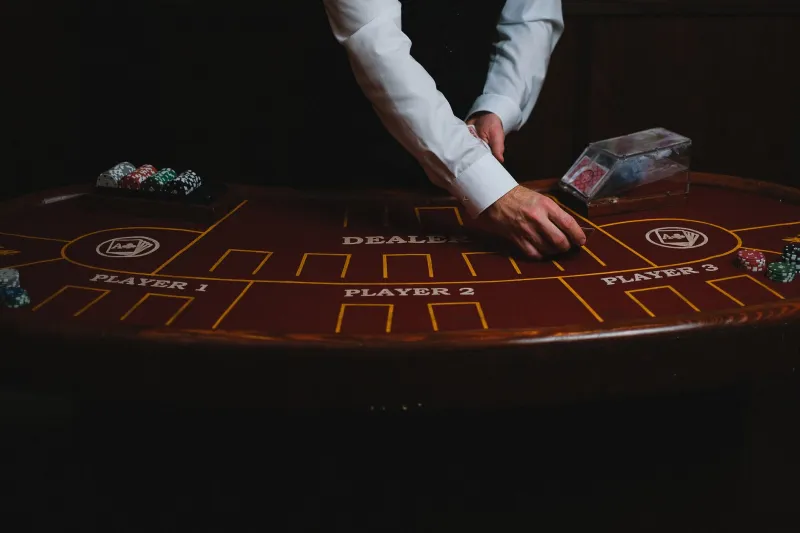
Photo: N/A studio, Public domain, via Wikimedia Commons
Every immigrant community brings its games with it. The Italians brought bocce and card clubs. The Chinese brought mahjong parlors. And the South Asian diaspora — engineers, doctors, students, taxi drivers, shop owners arriving in waves from the 1960s onward — brought Teen Patti, Andar Bahar, and a deep, complicated cultural relationship with the bet itself.
What happened next was never written down anywhere official. But trace the arc, and you find one of the more fascinating untold stories in American gambling history.
The Basement Era: Cards, Cash, and Community
Picture suburban New Jersey, 1978. It's Diwali night. The kids have been fed and banished upstairs. Down in the finished basement, uncles and aunts gather around a folding table, and a deck of cards comes out.
Teen Patti — often called "Indian poker" — was the undisputed king of these gatherings. The rules were simple, the pots were friendly, the stakes were whatever the household could laugh about losing. It was gambling, yes, but it was also something else: a pressure valve, a social glue, a way for a newly arrived community to hold onto a piece of home.
These games served a function that historians of immigration would recognize instantly. In a country where you might be the only Pakistani family on the block, the weekly card night was a lifeline. Money moved across the table, sure. But so did language, gossip, matchmaking, and news from Lahore or Ahmedabad.
The Grey Market Years: Cricket, Corner Stores, and Word of Mouth
By the 1990s and 2000s, a second generation had grown up American, and the games evolved with them. Cricket fandom — always the connective tissue of the diaspora — became the engine. When India played Pakistan, when the World Cup rolled around, informal betting pools sprang up in workplaces, WhatsApp groups, and the back rooms of convenience stores and restaurants.
This was gambling in the classic American underground tradition: no regulation, no consumer protection, everything resting on trust and community reputation. It worked, mostly, the same way it worked in Queens bookmaking operations and Super Bowl squares pools in every office in America. Occasionally it didn't, and a story would make the local news about a dispute gone wrong.
Meanwhile, offshore online books discovered what the diaspora already knew: South Asian bettors in America were an underserved, passionate, cricket-hungry market. Grey-market platforms filled the void, with all the risks that implies.
The Legal Boom Changes Everything
Then came 2018. The Supreme Court struck down the federal ban on sports betting, and states began legalizing sportsbooks one by one. For the diaspora, it was a sea change.
Suddenly, the kid who grew up watching his uncles play Teen Patti in the basement could open a licensed app, fund it with a debit card, and bet on the PSL final with actual legal recourse. Cricket markets appeared on mainstream US sportsbooks — first as novelties, then as staples. Kabaddi, badminton, and other South Asian sports followed.
And the cultural games made the jump too. Teen Patti and Andar Bahar — once strictly physical, in-person, cash-under-the-table affairs — are now live-dealer fixtures on licensed online casinos, streamed in HD with real dealers, played by a new generation that never knew the basement version.
What the Old Guard Thinks
The generational divide is the most human part of this story. Many first-generation immigrants view the shift with unease. The card night had built-in guardrails: you played with people who knew you, stakes everyone could afford, and aunties who'd hear about it if you got carried away. The app has none of those.
Younger bettors see it differently. Regulation brought transparency, deposit limits, self-exclusion tools, and legitimacy for something their community did anyway, in the shadows, for decades.
Both have a point. And both are worth listening to as the industry keeps growing.
From Folding Table to App Store
The through-line of this whole history is adaptation. A game played in Indian villages survived the Atlantic crossing, adapted to New Jersey basements, migrated to WhatsApp groups, and finally landed in regulated digital marketplaces — each time shedding some of its old form and keeping its soul.
From Lahore to Las Vegas, from the folding table to the app store, the story of South Asian gambling in America is really a story about migration itself: what we carry with us, what we leave behind, and what we rebuild when we get here. The next time you tap a cricket market on a licensed US sportsbook, you're not just placing a bet. You're holding the latest chapter of a fifty-year story that started with a deck of cards in somebody's basement.